

If you're familiar with our products, you know we're a little obsessed with umami. It's that deep, savoury, can't-quite-put-your-finger-on-it flavour. It's the fifth taste, right alongside sweet, salty, sour, and bitter, and it comes from natural compounds like glutamates and nucleotides hiding in everyday ingredients.
The good news? You don't need anything fancy to start cooking with more umami. Here are 10 natural sources you can find at your local grocery store:
1. Tomatoes. Especially sun-dried or slow-roasted ones. Cooking down tomatoes concentrates their natural glutamates, which is why a good marinara tastes so much richer than a raw tomato slice.
2. Mushrooms. Shiitakes are the umami MVP, dried or fresh, but cremini and portobello bring plenty too.
3. Parmesan cheese. Aged cheeses develop glutamates over time, which is why a grating of real Parmigiano-Reggiano can make almost any dish taste more "finished."
4. Soy sauce. Loaded with amino acids, soy sauce is one of the fastest ways to add savoury depth to a dish without adding a ton of extra ingredients.
5. Miso. Fermented soybean paste that brings salt, funk, and umami all in one spoonful. Great in soups, dressings, or even stirred into butter.
6. Seaweed (kombu). This is where umami science actually started. A Japanese chemist first isolated glutamate from kombu broth back in 1908. Simmer it in water for an instant savoury base.
7. Anchovies. Melted into a sauce, anchovies practically disappear but leave behind a salty, savory backbone that ties dishes together.
8. Aged, cured meats. Think prosciutto, salami, or a well-aged steak. Curing and aging break down proteins into amino acids, boosting that savoury depth.
9. Fermented black beans. A staple in a lot of Asian cooking and one of our favourites. These little beans are intensely savoury and salty - a small amount goes a long way in stir-fries and sauces.
10. Nutritional yeast. A favourite in plant-based cooking, nutritional yeast has a cheesy, savoury flavour that's naturally rich in glutamates, no dairy required.
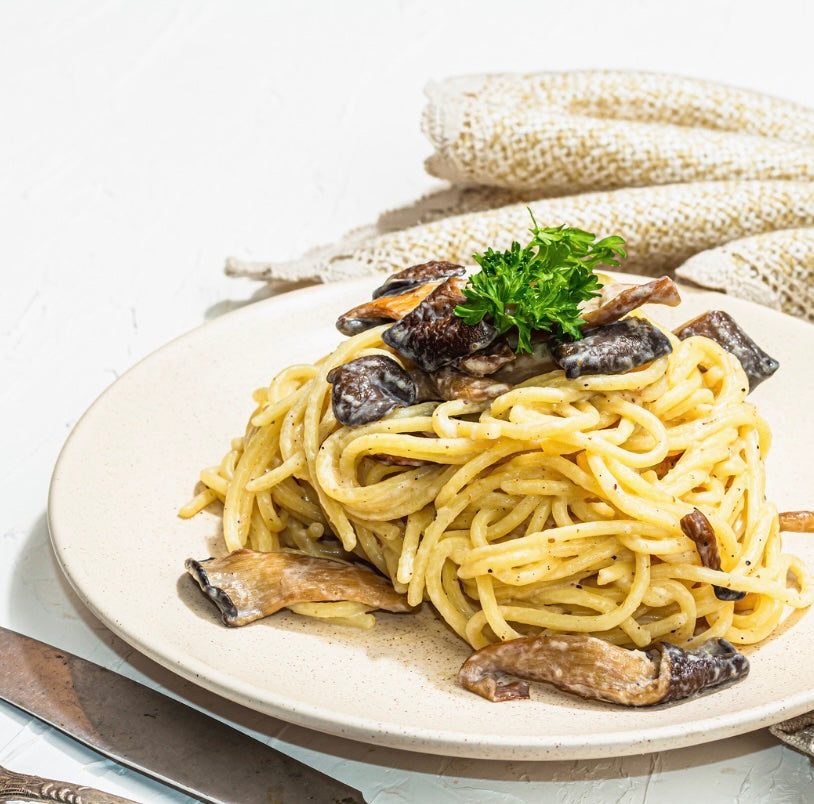
The best part about umami-rich ingredients is that you can combine them to deliver even more of an umami-punch. Give it a try with your next creamy pasta sauce - combine mushrooms and parmesan, for example, to deliver even more big, bold, umami flavour.
0 comments